
Tutor Toolbox
Welcome to the Tutor Toolbox - your go-to space for tips and resources!
Whether you're looking for help with a tutoring question, need a new activity, want to explore life-skill lessons, or simply need a refresher, you'll find resources here to support you throughout your tutoring experience.
On this page, you'll find:
Tutor Support & Material Request Form – Request materials or ask for help with anything related to your tutoring experience.
Resources Available in the Office – Explore curriculum books, learning supplies, and other materials available for tutors to use.
Life-Skill Lesson Packets – Ready-to-use lessons that connect English learning to everyday situations and practical skills.
Frequently Asked Questions – Quick answers to common tutoring and program questions.
Learning Library – Access tutor training videos anytime for a refresher or to build your skills.
Additional Teaching Resources – Explore resources organized by topic, including Listening & Speaking, Reading & Writing, Grammar, Vocabulary, Technology, and Additional Worksheets. Resources are organized by learner level to help you find materials and activities appropriate for your learner.
Professional Development Websites – Explore additional websites and online resources to expand your tutoring knowledge and skills.
Past Tutor eNewsletters - Explore previous eNewsletter issues for tutoring tips, instructional resources, program updates, and ideas you can use with your learner.
Bookmark this page and check back often, we'll continue adding new resources and support!
Tutor Time Log - July 1 - September 30 (Quarter 1). We must report all volunteer hours that tutors dedicate to our program each quarter. Please report your hours when requested by our Program Manager.
Tutor Support
This form is here to support you in your tutoring journey. Use it to request materials or ask for help with anything related to your tutoring experience. Whether you need specific resources, have questions, or are looking for new ideas, our team will do our best to provide what you need so you can feel prepared and confident in your work with learners.
Tutor Support & Material Request Form - You should receive a response within 24 hours Mon-Fri.
Meet Your Program Staff:
Laurie Hoffman, Program Manager
Carol Garcia, Tutor Support Specialist
Ambreen Abdullah, Assessment Specialist
Ana Aguilera-Duncan, Intake Coordinator
Resources we have in the office for you to use
Curriculum Books
English No Problem Levels Literacy-Level 2
Step Forward-Intro-Level 1
Ventures Level 1 & 2
Journey To Success Levels 1-5
Challenger Levels 1-6
Grammar/Phonics Books
Grammar Wise Book 1
Focus on Phonics Book 1
Reading Books
Easy Stories Plus
Health Stories Introductory
Life Goes On Introductory Student Book
That's Life Introductory Student Book
Workplace Books
Conversations for Work
Road to Work Applying and Interviewing
Road to Work Choosing a Job Path
Road to Work Succeeding on the Job
Additional Worksheets
Days of the Week (write in correct order)
Days of the Week (questions)
Additional Supplies
Dry Erase Boards, Markers
Notebooks, Ruled 4×6 Note Cards, Post-it Notes
Ruled Handwriting Paper
Pencils
Life-Skill Lesson Packets
-
Types of Community Goals:
Community Member Goals
Community Lesson Plan (Levels 0-2, 3-4, 5-6, ABE)
Consumer Goals
Shopping & Money Lesson Plan (Levels 0-2, 3-4, 5-6, ABE)
Life Skills / Daily Living Goals
Survival Kit Lesson Plan (Levels 0-2, 3-4, 5-6, ABE)
-
More information coming soon…
-
Employment Lesson Plans (Levels 0-2, 3-4, 5-6, ABE)
Types of Employment Goals:
Job Seeker Goals
Workplace Goals
-
Shopping & Money Lesson Plan (Levels 0-2, 3-4, 5-6, ABE)
-
Additional information coming soon…
-
Health Lesson Plan (Levels 0-2, 3-4, 5-6, ABE)
Types of Health Goals:
Doctor's Office Goals
Participation Goals
Rx Management Goals
Preventive Care Goals
Frequently Asked Questions
-
Develop a lesson plan each week.
Ground your lessons in your learner’s real-life goals.
Emphasize speaking and listening, plus include reading and writing in each lesson.
Design your lessons to build on those from previous sessions.
Review key topics and lessons from the previous week.
Address what the learner should do for the following week.
Take notes on what worked well, what needs improvement, and what challenges came to light.
Encourage your learner to generate useful materials, such as sight word lists, picture cards, post-its, and experience stories that can be used for study and review.
Revisit instructional videos frequently for direction and inspiration.
Keep in touch with other tutors and trainers at Literacy DuPage to share ideas and ask questions. description
View more information in the Tutor Training Resource Center below.
-
In partnership with Literacy Volunteers Fox Valley, we recently presented the workshop "Enhancing Lesson Planning with AI Tools." A recording of the session is available here for those who missed it or would like to revisit the content.
Watch this video to learn more.
ChatGPT Overview Video - Part 1
ChatGPT Overview Video - Part 2
-
The Oxford Picture Dictionary is a visual learning resource that helps English learners build vocabulary and communication skills through everyday topics and illustrations. It is also a helpful lesson-planning tool for tutors, providing ready-made themes, vocabulary, and conversation ideas that can easily support speaking, listening, reading, and writing activities.
OPD Video 1
-
In volunteer-driven programs, especially with beginners or low-literacy learners, it’s important to prioritize:
Comprehension (understanding spoken English)
Basic speaking skills (getting needs met, asking/answering questions)
Pronunciation is addressed in the service of being understood, not perfection. Too much focus on “perfect” pronunciation can be discouraging.
Volunteer tutors should aim to support intelligibility and build learner confidence.
-
Our volunteer tutors play a valuable role in helping learners develop the language needed for their naturalization interview by providing direction and practice with citizenship-specific content skills. Tutors focus on listening, speaking, reading, and writing skills, as well as reviewing interview questions and responses and conducting mock interviews.
However, Literacy DuPage and its staff do not assist learners with application services because of legal implications. See the section Legal and N-400 Application Services for legal referral details. Fortunately, several neighboring libraries and community programs offer free citizenship classes.
Our volunteer tutors can still play a valuable role in supporting learners by:
Practicing Civics Questionsfor the naturalization test.
Conducting mock interviews to build confidence in answering interview questions.
Improving English language skills — speaking, listening, reading, and writing.
Enhancing understanding of U.S. history and government concepts related to the naturalization test.
Helpful USCIS links:
Tutors should not:
Assist with completing the N-400 application.
Provide legal advice or guidance on immigration status or processes.
For official citizenship assistance, we encourage learners to seek support from accredited immigration organizations or legal professionals.
-
Volunteers and staff should not assist anyone with this process, instead refer them to an immigration lawyer. It is important that trained experts in the fields of immigration law and policy handle our students’ technical questions about immigration and citizenship.
It is important that you do not ask the status of your learner. As an organization, we do not ask status during the intake process, and it is at their discretion if they share this information with you.
Tutor/Learner pairs must meet in a public location. Meetings in private residences are not allowed.
If your learner has expressed concern over continuing with in-person tutoring, offer them other options such as Zoom, What’s App, FaceTime. Respect their decision to discontinue tutoring in-person and inform Laurie Hoffman, Program Manager, lhoffman@literacydupage.org, of any changes. Although our libraries have guidelines in place to protect our community members, we cannot guarantee safety.
If your learner has additional questions, please refer them to the Illinois Coalition for Immigrant & Refugee Rights at 1-855-HELP-MY-FAMILY (1-855-435-7693) or World Relief Immigration Legal Services: Aurora (630) 906-9546, Chicago (773) 583-9191, Carol Stream (630) 462-7660.
Thank you again for all you do to ensure a supportive tutoring environment for you and your learner.
-
Goal Achievement Progress - We are a life-skills, goal-based program. Each learner sets goals during the intake process, and goal progress is evaluated after 35 hours of instruction. Per our grant agreements, we are required to report on learner progress after each assessment.
Post-Tests - We set a goal that 65% of adult learners will receive a post-test after each 35 hours of instruction.
If the tutor is unable to attend the post-test, the assessment specialist will contact the learner directly (similar to when they received their pre-test) to schedule their post-test which will be facilitated over Zoom/WhatsApp, unless it is an ABE test that must be delivered in person. Once the post-test is complete, results will be shared with the Tutor Support Specialist who will then contact the tutor to discuss the results and recommended new materials if needed. In order for us to count a learner as making progress in our program, they must be pre-tested and post-tested during the current fiscal year.
Are you a current tutor looking for a refresher?
All tutors are welcome to access our training videos anytime through the Learning Library. The Learning Library is password protected. Simply complete this form with your name and email address, and the password will be emailed to you.
Learning Library
Module 1. Who Are Adult Learners?
Module 2. Language Learning and Teaching
Module 3. Cross-Cultural Communication
Module 4. Learner Levels
Module 5. Listening and Speaking
Module 6. Reading and Writing
Module 7. The Match Process
Module 8. Progress and Goal Setting
Module 9. Planning Your First Meeting
Module 10. Lesson Planning Part 1
Module 11. Integrating all 4 Skills
Module 12. Finding Helpful Materials
Module 13. Using Technology
Module 14. Lesson Planning Part 2
Additional Resources
Printable Resources, Worksheets, or Online Websites
Reference your Learner’s last assessment score to figure out what level resources will fit best.
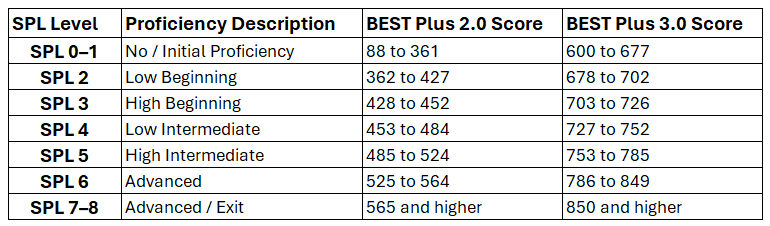
There is a great deal of overlap across lists with regards to student learning levels. Many resources categorized as “Beginner” can be used very effectively for intermediate and advanced students. Many resources categorized as “Advanced” can be used as a tutor reference for tutors working with beginner students.
Listening & Speaking
Emergent Learners
(Levels 0-1)
English No Problem-Literacy Level (LDP Office)
Step Forward Intro (LDP Office)
Beginner Learners
(Levels 2-3)
English No Problem-Level 1 (LDP Office)
Step Forward Intro (LDP Office)
Intermediate Learners
(Levels 4-5)
English No Problem Level 2-3 (LDP Office)
Step Forward Level 1 (LDP Office)
Advanced Learners
(Levels 6-7)
English No Problem Level 4 (LDP Office)
Common American Phrases in Everyday Contexts
ABE
Ann Gianola Books-True Stories, Long Story Short,
Reading Basics/Intermediate McGraw Hill
Journey To Success
Reading & Writing
Emergent Learners
(Levels 0-1)
Laubach Ways to Reading Skill Book 1
Phonics and Life Skills Reading Book 1
Beginner Learners
(Levels 2-3)
Very Easy True Stories
Sam and Pat Book 1, Book 2
First Class Reader
Health Stories Introductory
Intermediate Learners
(Levels 4-5)
Novel Scenes by Ann Gianola
Reading Basics by McGraw Hill
Health Stories Low/High Beginning Beginning
Life Goes On
Ture Stories
Advanced Learners
(Levels 6-7)
Long Stories Short by Ann Gianola
Ture Stories
American Lives Book 1, Book 2, Book 3
Reading Basics Intermediate by McGraw Hill
Grammar
Emergent Learners
(Levels 0-1)
Ventures Basic
Beginner Learners
(Levels 2-3)
English for Everyone
English in Action 1
Intermediate Learners
(Levels 4-5)
Grammar Wise Book 1
English in Action 2
Advanced Learners
(Levels 6-7)
Grammar Wise Book 2
English in Action 3
Vocabulary
Emergent Learners
(Levels 0-1)
Oxford Picture Dictionary (LDP Book)
English Club Vocabulary
Beginner Learners
(Levels 2-3)
Oxford Picture Dictionary (LDP Book)
English for Everyday Activities: A Picture Process Dictionary Listening Activity Book
English Club Vocabulary
Intermediate Learners
(Levels 4-5)
Oxford Picture Dictionary (LDP Book)
English Club Vocabulary
Advanced Learners
(Levels 6-7)
Vocabulary Basics by Eliza Comodromos, Paul Langan
Technology
How to use AI in Lesson Planning - See FAQ section above
Additional Worksheets
Learner Competencies
Planning Your First Meeting
Student Match: First Meeting Outline, Initial Meeting Guidelines, First Meeting Student Information (Tutor Training Homework)
Writing Prompts for Student Writing Sample (Tutor Training Homework)
Lesson Planning Part 2
English Practice Log (Tutor Training Homework)
Additional Worksheets
Days of the Week (write in correct order)
Days of the Week (questions)
Additional Websites
Professional Development Websites
Tutors can find all volumes of our Tutor Toolbox (formerly Keeping in Touch) eNewsletter.
eNewsletters include resources compiled by our Tutor Support Specialist.
-
Tutor Tool Box, Volume 101 (Reviewing Material for Effective Learning)
Tutor Tool Box, Volume 100 (Building Real-World Skills for Lasting Independence)
Tutor Tool Box, Volume 99 (Goal Setting and Instructional Alignment)
-
Tutor Tool Box, Volume 98 (Scaffolding Strategies for Adult Learners)
Tutor Tool Box, Volume 97 (Health Literacy)
Tutor Tool Box , Volume 96 (Building Language Complexity)
Tutor Toolbox, Volume 95 (Teaching w/ Pictures/OPD)
Tutor Toolbox, Volume 94 (Emotion Vocabulary)
Keeping in Touch, Volume 93 (Teaching Reading)
Keeping in Touch, Volume 92 (Lesson Planning)
Keeping in Touch, Volume 91 (Functional Language)
Keeping In Touch, Volume 90 (Sentence Frame)
-
Keeping In Touch, Volume 83 (Listening)
Keeping In Touch, Volume 81 (Using Informal Assessments with English as Second Language Students)
Keeping In Touch, Volume 80 (After Reading Strategies)
Keeping In Touch, Volume 79 (While-Reading Strategies)
Keeping In Touch, Volume 78 (Reading Skills and Strategies Development)
Keeping In Touch, Volume 77 (Navigating Success: Reasons to Teach the Language of Understanding Directions)
Keeping In Touch, Volume 76 (Practical English)
-
-
-
-
-
-